

Cocaine, often referred to by its street name “coke,” is a powerful central nervous system stimulant derived from the coca plant. It is known for producing short-lived yet intense feelings of euphoria, increased energy, and alertness. However, despite the brevity of its effects, cocaine and its metabolites can linger in the body for much longer periods, making detection through drug testing possible days or even weeks after use.
Understanding how long cocaine stays in your system is essential for a variety of reasons. Whether you are navigating workplace drug screening, fulfilling court-mandated testing, or considering detox and treatment, knowing the cocaine detection timeline can help you make informed choices. In this article, we’ll explore the science behind cocaine metabolism, detection methods, key influencing factors, and the resources available at Pacific Breeze Recovery in Huntington Beach to support lasting recovery.
💬 Struggling with cocaine use? Reach out to Pacific Breeze Recovery today.
How Cocaine Is Processed by the Body
Once cocaine enters the body—whether by snorting, smoking, injecting, or oral ingestion—it rapidly crosses into the bloodstream and travels to the brain. This fast-acting stimulant quickly produces euphoric effects by interfering with the brain’s natural chemical messengers, particularly dopamine. Cocaine blocks the reabsorption of dopamine, causing it to accumulate and overstimulate certain brain circuits, resulting in intense feelings of pleasure, energy, and alertness.
However, these effects are typically short-lived, with the “high” lasting anywhere from 15 minutes to an hour depending on the route of administration. For example, smoking or injecting cocaine produces a faster, more intense high that wears off quickly, while snorting or ingesting may take longer to kick in but lasts a bit longer.
Behind the scenes, the body is already working to eliminate the drug. Cocaine is metabolized primarily in the liver, where it’s broken down into several byproducts. The most prominent of these is benzoylecgonine, the primary metabolite used in most drug screenings due to its longer half-life and detectability.
After being metabolized, these compounds are excreted through the kidneys and urine, although small traces can also be found in saliva, sweat, blood, and even hair. While the high fades quickly, benzoylecgonine can remain in the system for several days—or even weeks for chronic users—making cocaine use detectable well beyond the period of intoxication.
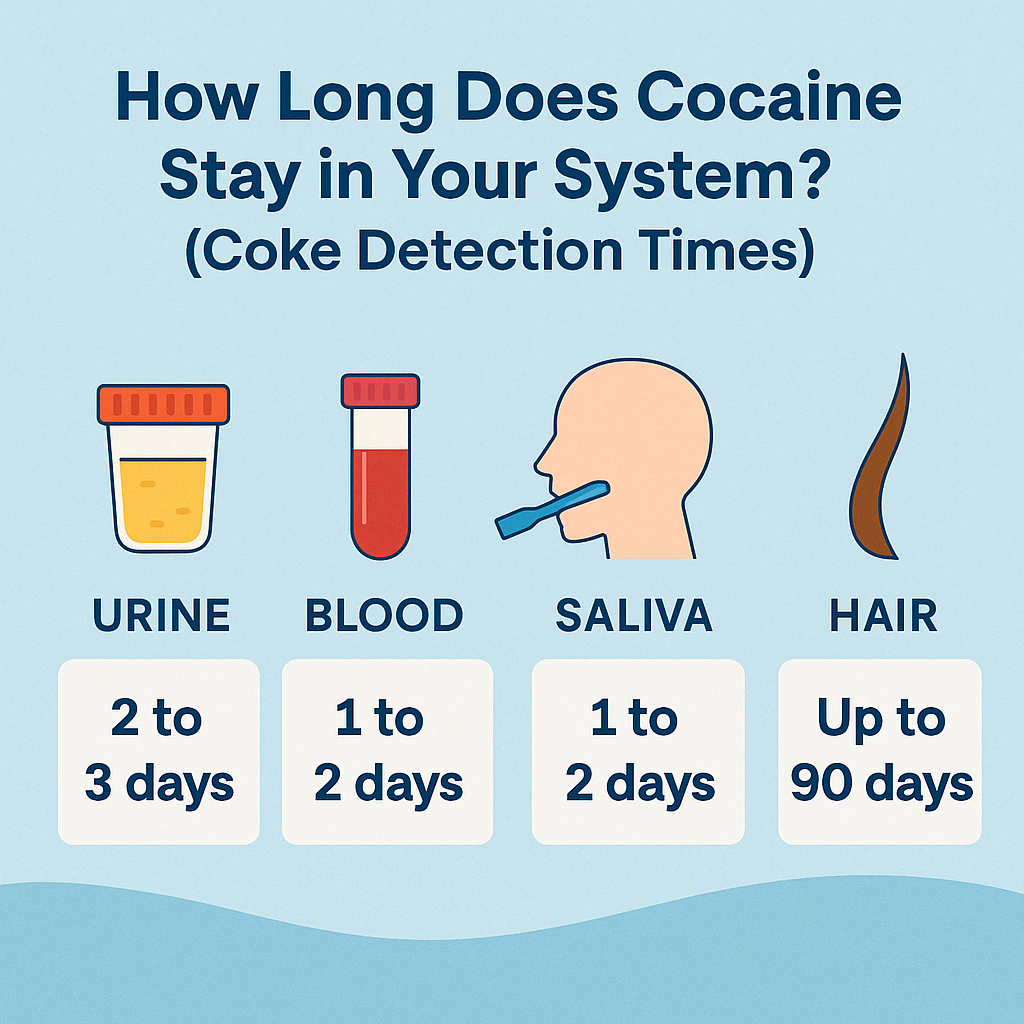
Cocaine Detection Times by Test Type
Various drug testing methods are used to detect cocaine use. Each has different windows of detection and is used based on the context—employment testing, legal investigations, or clinical assessments.
1. Urine Tests: Most Common for Employment and Rehab Settings
Urine testing is the most widely used method for detecting cocaine due to its affordability and longer detection window.
Detection times:
- Single use: 2–3 days
- Moderate use: 4–5 days
- Heavy or chronic use: 7–10 days, occasionally up to 14 days
Urine tests detect benzoylecgonine, not the cocaine itself. The concentration of metabolites may vary based on fluid intake and kidney function, but urine remains the gold standard for routine drug screening.
🔍 Learn more about our Cocaine Detox Program at Pacific Breeze Recovery to support a safe and complete cleanse.
2. Blood Tests: Ideal for Immediate Detection
Blood tests provide accurate detection of active cocaine and its metabolites in the bloodstream, but they have a much shorter window than urine tests.
Detection times:
- Occasional use: up to 12–24 hours
- Chronic or high-dose use: up to 48–72 hours
Because of its short detection window and invasiveness, blood testing is typically used in emergency situations, such as overdose or impaired driving cases.
3. Saliva Tests: Convenient but Time-Sensitive
Saliva testing is increasingly popular due to its non-invasive nature and quick turnaround times.
Detection times:
- All users: 24–48 hours
Saliva tests detect both cocaine and its metabolites and are often employed in roadside drug testing or by employers who require on-the-spot assessments.
4. Hair Tests: Long-Term Usage Detection
Hair follicle testing offers the longest detection window, capable of identifying drug use from weeks to months prior.
Detection time:
- All users: up to 90 days
However, hair tests are less effective at detecting recent or one-time use, and their results may be influenced by hair color, hygiene, and external contamination.
Factors That Influence Cocaine Detection Time
The length of time cocaine remains detectable in the body can vary widely depending on a number of personal and physiological factors. Understanding these variables is essential for individuals preparing for drug testing, entering treatment, or beginning their recovery journey.
- Frequency of Use: Regular or long-term use causes cocaine metabolites to accumulate in the body, making them detectable for longer periods.
- Dose: Larger quantities of cocaine result in more extensive metabolite buildup, extending the detection window.
- Metabolic Rate: Individuals with faster metabolisms tend to break down and eliminate cocaine more rapidly.
- Body Fat Percentage: Cocaine and its byproducts can become stored in fat tissue, especially in people with higher body fat, slowing the excretion process.
- Hydration and Activity Levels: Staying well-hydrated and physically active may help the body eliminate cocaine more efficiently, although the impact is moderate.
- Liver and Kidney Function: Because these organs are responsible for processing and filtering substances, impaired function can slow the detoxification process and prolong detection times.
Why Cocaine Detox Is Essential for Recovery
While cocaine withdrawal may not include the severe physical dangers associated with substances like alcohol or opioids, it can be mentally and emotionally taxing. Common withdrawal symptoms such as intense cravings, agitation, anxiety, depression, and extreme fatigue can be overwhelming and often lead to relapse without the right support.
That’s why a professionally supervised detox program is so important. At Pacific Breeze Recovery, we provide a safe, structured environment to help clients move through the withdrawal phase with comfort, stability, and guidance.
Our Cocaine Detox Program includes:
- 24/7 medically supervised care to monitor symptoms and ensure safety
- Dual diagnosis support for underlying mental health conditions
- Nutritional planning to restore energy and stabilize mood
- Holistic therapies such as yoga, equine therapy, and music therapy to support whole-person healing
- Individual and group counseling to build motivation for long-term recovery
🌊 If you or a loved one is struggling with cocaine addiction, don’t wait—contact Pacific Breeze Recovery in Huntington Beach today and take the first step toward lasting recovery in a peaceful, coastal setting.
Cocaine Use in Huntington Beach
Cocaine continues to be one of the most commonly misused stimulants in California, and Huntington Beach is no exception. While often associated with coastal beauty and laid-back living, the city also faces the realities of substance use—particularly among young adults, professionals, and those exposed to nightlife culture. In Orange County, data from the Orange County Health Care Agency shows a consistent presence of cocaine in ER visits and substance abuse admissions.
Huntington Beach’s proximity to party scenes, social pressures, and high-stress environments has contributed to rising concerns around cocaine use. In many cases, what begins as occasional recreational use can quickly escalate into dependence, leading to mental health struggles, strained relationships, and increased medical risks.
If you or someone you care about is struggling with cocaine use in Huntington Beach, early intervention can make all the difference. Pacific Breeze Recovery, located right here in Huntington Beach, offers compassionate, confidential care with personalized detox and treatment plans designed to support long-term recovery.
🌊 Reach out today and take the first step toward healing in a peaceful, coastal setting.
Frequently Asked Questions
Q: Can a single line of cocaine be detected in a drug test?
A: Yes. Even a single use of cocaine—sometimes referred to as “just one line”—can be detected in standard drug screenings. Urine tests may show positive results for up to 3 days after use, depending on factors such as metabolism, hydration, and overall health. Hair follicle tests can detect use for much longer, sometimes up to 90 days.
Q: Does drinking water flush out cocaine faster?
A: While staying hydrated supports overall health and proper kidney function, it won’t significantly speed up the elimination of cocaine metabolites from the body. Some users believe that drinking excessive amounts of water can “flush” the drug faster, but this is a myth. Medical detox is the safest and most effective way to eliminate cocaine from your system.
Q: How soon should I seek detox after regular cocaine use?
A: The sooner, the better. Early intervention reduces risk of relapse and long-term cognitive impact.
Take the First Step Toward Recovery Today
Understanding how long cocaine stays in your system is only part of the story. If you’re finding it hard to quit or if you’re feeling the emotional and physical toll of cocaine use, it’s time to reach out.
At Pacific Breeze Recovery, we help individuals in Southern California and beyond detox safely, stabilize, and begin a meaningful journey to recovery. Whether you’re preparing for testing, recovering from a relapse, or seeking help for the first time, we’re here to support you.
📍 Schedule a confidential consultation
👥 Explore our Cocaine Detox and Holistic Programs